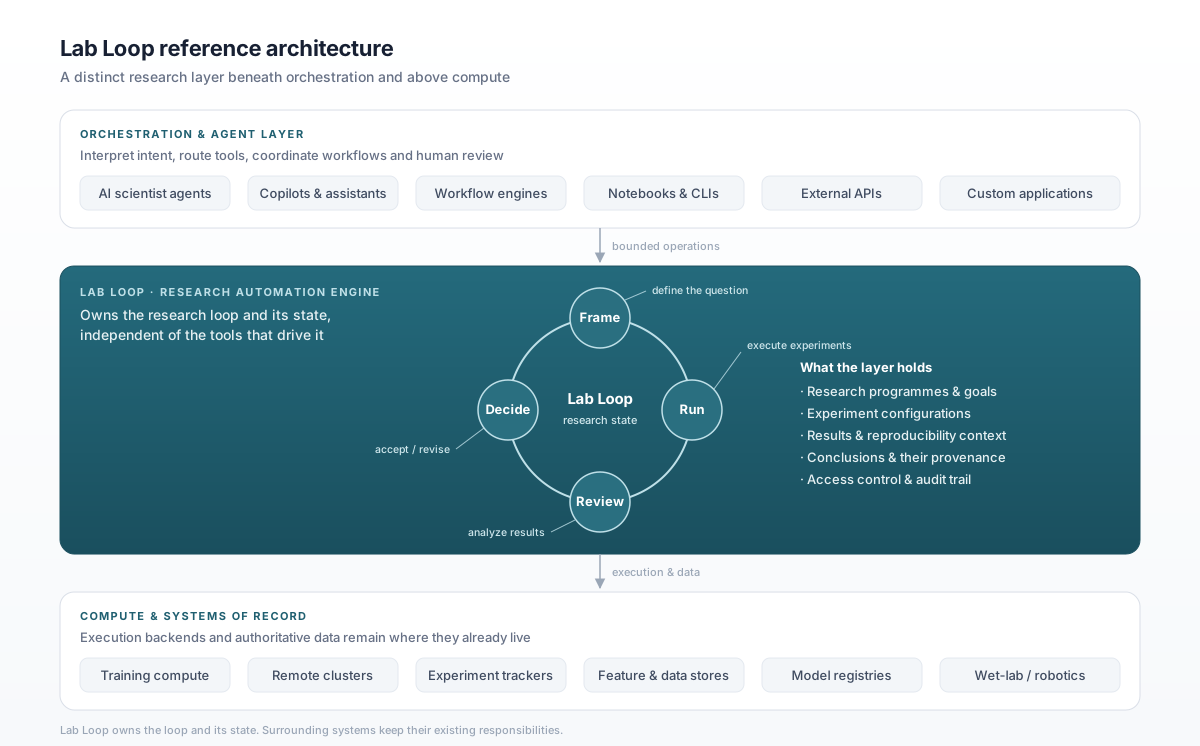
Agents and assistants can interpret intent and coordinate work. Lab Loop owns the loop: the hypotheses, controls, evidence and conclusions that define the research.
Different layers do different jobs.
User interaction, intent interpretation, tool selection and process coordination.
Programmes, hypotheses, designed experiments, controlled bundles, evidence, belief state and immutable conclusions.
Training compute, remote clusters, trackers, data stores, model registries and lab robotics remain authoritative for execution and operational state.
Expose narrow, typed operations rather than unrestricted access to internal state.
open_programme
state_hypothesis
design_trial
capture_bundle
record_evidence
update_belief
close_conclusion
The caller requests a step of the loop. Lab Loop executes it against explicit governance and returns a reproducible, traced result.
A distinct loop layer creates a clear place to apply controls, reproducibility and evidence requirements.
Claims and their refutation criteria can be inspected and versioned.
Agents operate through defined loop operations rather than unconstrained mutation of research state.
Hypotheses, bundles, evidence and conclusions are retained together, so any claim can be traced to its experiments.